
Twenty-Four Hours a Day
BookMobileBooks & Reference
4.91.05K Reviews
- Version
- 2.0.14
- Installs
- 10.00K
- Age Rating
- Everyone
Screenshots
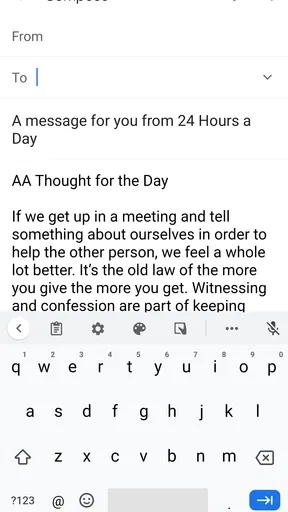
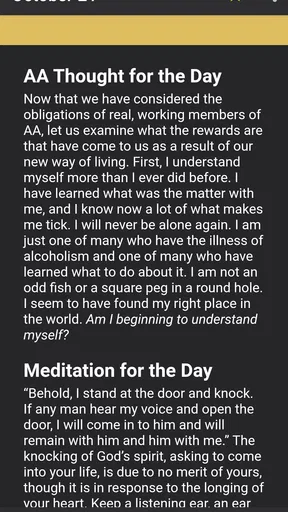
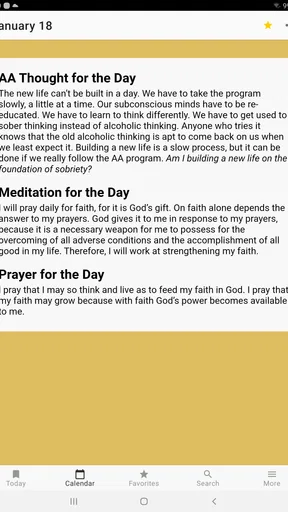
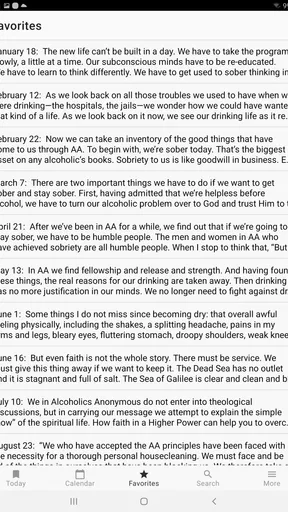
Our Review of Twenty-Four Hours a Day
 Analysis by Appyee
I judge a recovery app less by the first comforting reading than by whether it still feels useful after the novelty wears off. Twenty-Four Hours a Day is built around a steady daily rhythm: a short moment with a thought, meditation, and prayer rather than a large library demanding hours of attention. That makes it a practical fit for someone who wants a simple prompt for reflection, while its focused format may feel too narrow for readers looking for lessons, tracking, or a full recovery community.
Your Daily Companion for Recovery
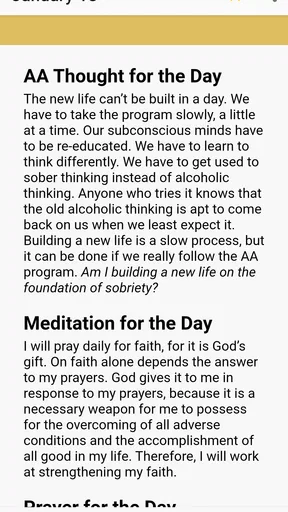
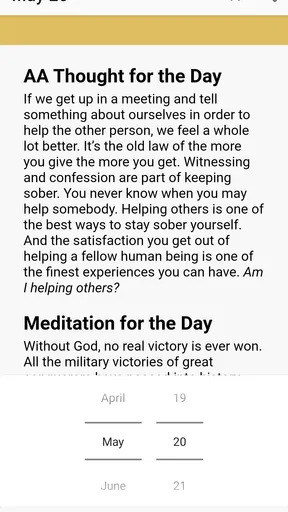
When I first opened Twenty-Four Hours a Day, I was welcomed by a simple and clean interface. It's not flashy, but that’s kind of the point, right? The app focuses on delivering its core content without distractions. Every day, you’re presented with a daily meditation, thought, and prayer. These aren’t just random musings—they’re carefully curated to help you reflect and find strength in your journey.
Features that Matter
The app is designed with simplicity and purpose in mind. Here’s what I found particularly useful:
- Daily Meditations: Each day offers a unique meditation that feels almost like it's speaking directly to what you might be going through. It’s a great way to start or end your day.
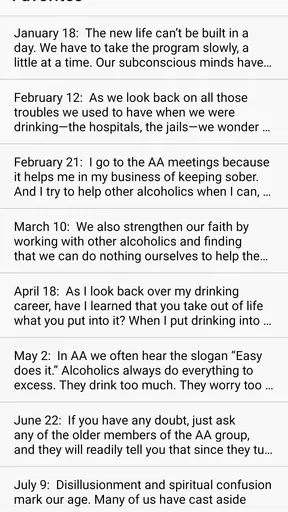
- Bookmarking: Found something that really resonates? Bookmark it for easy access later. This feature is a lifesaver for those "I need that wisdom again" moments.
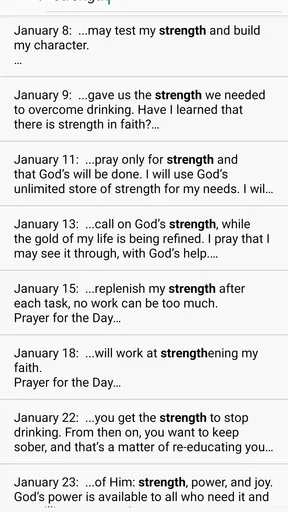
- Search Functionality: Sometimes you need guidance on a specific topic. The search function lets you quickly find entries related to your current struggles or triumphs.
- Offline Access: No Wi-Fi? No problem. You can access your daily readings offline, which is perfect for those times when you’re out of range or simply unplugging.
From the First Week to a Steady Habit
The first week is likely to be the easiest time to appreciate the daily format. Opening the app, reading a brief reflection, and carrying one idea into the day creates a low-effort routine. I’d keep the ritual attached to something already dependable, such as sitting down with breakfast or taking a quiet moment before bed. That is more sustainable than expecting motivation to arrive at the same time every day.
A useful way to make the reading active is to choose one sentence or idea and connect it to a specific situation you expect to face. If a reading touches on patience, for example, I might use it as a reminder before a difficult conversation rather than treating it as something to finish and forget. This small step turns a daily entry into a practical cue without asking the app to do more than it is designed to do.
For someone who is unsure whether a daily recovery reading will suit them, I’d try a modest routine first: read the day’s entry, pause for a minute, and decide whether any part is worth remembering. There is no need to turn it into a long journaling exercise. If the format helps, the habit can grow naturally; if it feels like an obligation, that is useful information too.
How It Fits Alongside Other Recovery Tools
Compared with a general meditation app, this one has a more specific recovery focus. Broad mindfulness apps can offer a wider range of guided practices for sleep, stress, or concentration, so they may be a better match if you want spoken sessions or several styles of meditation. Here, the appeal is the compact reading-based routine and its emphasis on recovery rather than a menu of unrelated wellbeing topics.
It also differs from a recovery tracker or a meeting-focused tool. Those can help organize milestones, contacts, or participation, while this app gives you material for personal reflection. I would not treat a daily reading as a substitute for professional support, peer connection, or a recovery plan. It works best as a small companion to those things, especially when you want a quiet prompt between conversations or appointments.
That distinction also helps answer who should skip it. If you need interactive coaching, a place to talk with other people, or structured exercises that respond to your progress, this is probably not the right primary tool. If you prefer to read privately and return to a thought in your own time, its restrained approach may be exactly what makes it easy to keep around.
Ease of Use
Using the app feels like flipping through a familiar book. The navigation is intuitive, and you’re not bombarded with unnecessary notifications. I particularly appreciated that there are no ads interrupting the experience. It’s all about the user and their journey, not about making a quick buck.
For those new to the recovery scene, fear not. The app’s language is welcoming and inclusive, making it accessible regardless of where you are on your path. You don’t need to be tech-savvy to get the most out of it, which is a huge plus in my book.
The low-friction design is especially useful in an everyday setting. Imagine having a stressful commute or waiting for an appointment and wanting a short, private reset: a reading gives you something to consider without requiring headphones, a long session, or a stable connection. Offline access also makes it easier to rely on the app in places where service is poor. I’d still avoid using the phone while driving; the practical moment is before setting off or once safely stopped.
Keeping It Useful Month After Month
Long-term value comes less from novelty than from returning to the material with a different perspective. A reading that seems ordinary on a calm day may land differently during a difficult week. The bookmark option helps with that: rather than relying on memory, save entries that feel worth revisiting and use them as a small personal collection when you need a familiar reminder.
Search can support a more intentional workflow as well. When a particular concern is on your mind, looking for a relevant topic is more purposeful than scrolling through older entries at random. I would use it to revisit a theme, not to expect a perfect answer to a complicated personal problem. A short meditation can offer a perspective, but it cannot decide what action is right in every situation.
One trade-off is that a daily sequence can feel repetitive if you expect every entry to be immediately profound. I’d give myself permission to read without demanding a breakthrough each time. Some days, the value may simply be pausing long enough to check in with yourself. If a passage does not connect, there is no need to force it; the next reading may speak to a different moment.
Personal Reflections
On a more personal note, Twenty-Four Hours a Day has a way of grounding you. Some days, the meditation hits just right, offering insights or comfort that feel tailor-made. It’s like having a wise friend who just gets it. The app has helped me pause, reflect, and often, change my perspective on challenges I face.
The prayers included are gentle and non-denominational, which I think is important. They don’t push any particular belief system and instead focus on universal themes of hope and resilience.
That said, spiritual language is personal, and “non-denominational” will not mean “right for everyone.” Someone who wants explicitly faith-specific guidance, or who would rather avoid prayer altogether, should consider how that part of the daily format feels to them. I’d suggest approaching each entry on its own terms and keeping what is useful, rather than assuming every passage must fit every reader.
Who Is Likely to Keep It Installed?
The app is most appealing to people who already value brief reading as part of recovery and want a convenient way to return to that practice. It may also suit someone beginning to build a private reflection habit, provided they understand that a daily prompt is a support rather than a complete program. The content rating is Everyone, and the app is published by BookMobile; its focus remains the reading experience, not social interaction or progress management.
It is a paid app at $7.99, so I would weigh that cost against how often I expect to use a focused daily reader. Its average rating is 4.9 from around four thousand ratings, with roughly 1.1 thousand written reviews, and it has over ten thousand installs. Those figures suggest an established audience, but they cannot tell you whether the tone or routine will suit your own recovery. I’d make that decision based on whether a short reading is something I will actually return to.
The app was released on February 2, 2011, and its current version is 2.0.14, with a minimum operating-system requirement of 6.0. In practice, the useful question is whether it runs on the device you plan to use and whether you prefer reading on a phone. If you mainly want paper, an audiobook, or a more interactive digital tool, one of those formats may fit your habits better.
Maintenance, Fatigue, and the Long View
There is little upkeep involved in a reading-centered app: no elaborate routine to configure and no ongoing system of logs to maintain. That simplicity is a strength when attention is limited. The maintenance burden is mostly personal—remembering to make room for a small pause and deciding whether the reading deserves a place in your day. If opening another app already feels like one more task, a printed book kept somewhere visible may be easier to sustain.
The main source of fatigue is also the main design trade-off: a consistent daily format can become predictable. If you want changing formats, personalized plans, or a strong sense of progression, the experience may feel static over time. I would not expect the app to manufacture motivation. It can provide a prompt, but the habit still depends on your schedule, your needs, and whether this style of reflection helps you.
For a realistic routine, I’d use it at a transition point rather than trying to squeeze it into an already busy stretch. Reading before leaving home, or after putting the day aside in the evening, gives the entry a natural place. If one passage stands out, I’d bookmark it and perhaps return to it when a similar challenge comes up. If none does, I’d simply close the app and continue with the day; that keeps the practice gentle rather than turning it into a test of discipline.
The Final Word
So, is Twenty-Four Hours a Day worth downloading? Absolutely. Whether you’re deep into recovery or just starting out, this app offers something valuable. It’s a supportive tool that respects the user’s journey and provides daily insights that can genuinely make a difference. Plus, having these meditations at your fingertips anytime and anywhere is a game-changer.
For anyone seeking an uncomplicated yet profound daily companion, give this app a try. You might just find that it’s exactly what you need to navigate the ups and downs of life with a little more grace and a lot more peace.
My lasting verdict is positive, with a clear caveat: it earns space on a phone when reading-based reflection is already useful to you or when you want to cultivate that habit without a complicated system. It is less compelling if you expect a personal coach, community, or broad library of guided audio. The best test is whether the daily pause remains welcome after the first week. If it does, the app’s focused approach can keep serving you quietly; if it becomes a chore, a different format may be the more supportive choice.
Verdict
Strengths of Twenty-Four Hours a Day
- User-friendly interface for easy navigation.
- Daily reflections inspire personal growth.
- Offline access for convenience anywhere.
- Customizable notification settings.
- Supports multiple languages for inclusivity.
Limitations of Twenty-Four Hours a Day
- Limited interactive features available.
- No option for personal journaling.
- Ads can disrupt user experience.
- Some content requires in-app purchases.
- No community or social sharing features.
Similar Picks in This Category
View All
Google Play Books & Audiobooks
Google LLC4.7

네이버 - NAVER
NAVER Corp.3.5

Wattpad - Read & Write Stories
Wattpad.com3.7

King James Bible - Verse+Audio
Ozion4.8

Bible Offline-KJV Holy Bible
Bíblia Offline4.9

Amazon Kindle: Reading App
Amazon Mobile LLC4.8
Frequently Asked Questions
What is the main purpose of the Twenty-Four Hours a Day app?
The Twenty-Four Hours a Day app is designed to provide daily reflections, meditations, and prayers for individuals in recovery from addiction. It's based on the popular book of the same name and offers a portable, digital way to access daily motivational and spiritual guidance to support sobriety.
Is the Twenty-Four Hours a Day app suitable for all types of addiction recovery?
Yes, the app is designed to support individuals recovering from various forms of addiction, including alcohol and substance abuse. It delivers universal principles and reflections that apply broadly to anyone seeking to maintain sobriety and improve their mental and spiritual well-being.
Can I customize the daily reflections and meditations in the app?
While the app provides a set daily reflection from the book, users can personalize their experience by setting reminders for specific times of the day and bookmarking favorite passages. This allows users to revisit meaningful reflections and integrate them into their daily routine effectively.
Is an internet connection required to use the Twenty-Four Hours a Day app?
No, once the app is downloaded, it functions offline, allowing users to access daily reflections and meditations without an internet connection. This feature is particularly useful for those who may not have consistent access to Wi-Fi or data services.
How user-friendly is the interface of the Twenty-Four Hours a Day app?
The app is designed with a simple and intuitive interface, making it easy for users to navigate through daily reflections, bookmark important entries, and set reminders. Its minimalist design ensures that users can focus on the content without distractions, enhancing the overall user experience.
